In-depth review
REP FT-5000 2.0 Review (2027): Deep Stacks, Trolley Carriages, Serious Money
Full research review of the REP FT-5000 2.0: 224 lb stacks, trolley carriage design, height options, total cost logic, and the buyer it actually serves.

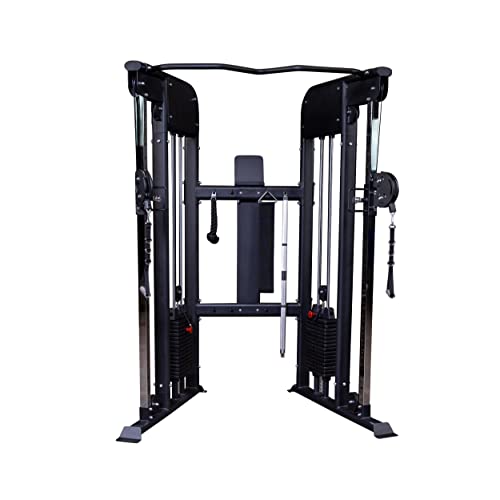
REP Fitness REP FT-5000 2.0 Functional Trainer
The heavy stack option: deep weight per side, trolley carriages, and a choice of working heights.
- Two stacks, 224 lb per side in the current 2.0 configuration
- Weight stack
- 1:2
- Pulley ratio
- 80 in and 93 in versions listed by the manufacturer
- Height options
Our verdict
The FT-5000 2.0 is what the category looks like when stack depth and carriage design stop being budget items. The stacks answer the heavy row question that ends lighter trainers, the trolleys make height changes a one handed habit, and the height options respect real garage ceilings. The bill matches the ambition, and the machine dominates the room it enters. Buy it as the last functional trainer you plan to purchase, because that is the math it is priced on. Lighter lifters will never use what they paid for.
What we like
- Heaviest stacks in this guide, so rows and presses stay challenging for years
- Trolley style carriages adjust with one hand and lock positively
- Two height versions let short garage ceilings stay in the conversation
What to watch out for
- Price and freight weight put it in a different league from plate loaded rivals
- Full depth with working room is the largest footprint here
Who it is for
Strong, committed home lifters and shared gyms where several users will push the stacks across years of training.
Stack depth, translated
At 224 lb per side and a 1:2 ratio, one handle tops out near 112 lb and both handles clipped to one attachment reach serious rowing loads. That single spec removes the ceiling anxiety that follows owners of 160 lb trainers, and it is the core of the price.
Trolley carriages in daily use
Roller trolleys glide the upright instead of sliding on bushings, and they lock with a positive pin. In practice this shows up dozens of times a week: mid superset height changes stop being a two handed wrestling match, a detail owners praise out of proportion to its size.
Height options and footprint
The 80 in version exists for low ceilings and the 93 in version for full overhead range and taller users. Either way the working footprint is the largest in this guide once step back space is counted. This machine is a room decision before it is a product decision.
Total cost honesty
Price the machine, freight, and the attachments your program needs together, then compare against a GFT100 with upgrade stacks. The REP still costs more; it also arrives complete at a ceiling the upgraded rival approaches but does not exceed. The value case rests on years of use, and owners frame it exactly that way.
Key specifications
- Weight stack
- Two stacks, 224 lb per side in the current 2.0 configuration
- Pulley ratio
- 1:2
- Height options
- 80 in and 93 in versions listed by the manufacturer
- Carriage
- Roller trolley pulleys with numbered adjustment positions
- Frame
- Heavy gauge steel with laser cut numbering
What owners report
Commonly praised
- Stack depth ends the adding band workarounds owners used on lighter trainers
- Carriage action and cable feel draw the strongest praise in this category
- Build reads as a long term anchor purchase
Common complaints
- Delivery and assembly are serious logistics, not an afternoon task
- Cost of the machine plus attachments climbs quickly
- Overkill feedback from lighter lifters who never pass half stack
Recurring themes from owner reviews on retailers and forums, summarised by our editors. Updated October 2026.
Sources: REP FT-5000 2.0 product documentation, Amazon and manufacturer listing specifications
Also consider
 Body-Solid
 GFT100 Functional Trainer
Dual 160 lb stacks, a 1:2 ratio, and swivel pulleys on a frame built for daily home use.
- Weight stack: Two 160 lb stacks, upgradeable to 210 lb per side
- Pulley ratio: 1:2 (handle weight is half the selected stack)
Sources: Body-Solid GFT100 product documentation, Amazon listing specifications
Check price on Amazonor add to your Amazon cartChoose the GFT100 with its 210 lb upgrade path if you want most of the ceiling for notably less money and a smaller footprint. Read our Body-Solid GFT100 Functional Trainer review
XMark XM-7626 Functional Trainer Cable Crossover
Dual 200 lb stacks on a crossover width frame, for lifters who train flies the way clubs program them.
- Weight stack: Two 200 lb stacks
- Pulley ratio: 1:2
Sources: XMark XM-7626 product documentation, Amazon listing specifications
Check price on Amazonor add to your Amazon cartChoose the XM-7626 if wide crossover geometry matters more to your chest training than carriage refinement.
Research-based assessment: manufacturer specifications and documentation, cross-checked against retailer listings and recurring themes in published owner feedback. We do not claim hands-on testing we have not performed.
FAQ
Questions, answered straight
Which height version should I buy?
Measure ceiling to the lowest obstruction, then leave assembly and pull up clearance. The 80 in version suits most garages; the 93 in version suits taller lifters and rooms that can honestly take it.
Is the FT-5000 2.0 overkill for a beginner?
On stacks alone, yes for now, but beginners become intermediates in the same room. The honest test is budget and commitment: this price only makes sense for a gym you are certain will be used for years.
Can it handle two handed heavy rows?
Yes: clip both carriages to one long attachment and the combined effective load covers heavy rowing for nearly all home lifters, which is precisely the use case the deep stacks were built for.