In-depth review
Titan Soft Plyo Box Review (2027): The Stack That Rebuilt Jump Confidence
Full research review of the Titan soft plyo box set: foam density and landing certainty, strap discipline, height combinations, and cover durability over seasons.
Titan Fitness Soft Plyo Box (Stackable Set)
Stackable foam blocks in four heights that strap together, forgiving on misses and modular on storage.
- Stackable blocks in 6, 12, 18, and 24 in classes, combined heights above 30 in possible
- Heights
- High-density foam core with vinyl cover, strap-connected stack
- Construction
- Rated for bodyweight jump training per manufacturer listing
- Capacity
Our verdict
The Titan soft set is built around a behavioral insight: athletes jump higher when a miss costs nothing. Four foam heights that strap into combinations let training step up in increments no 3-in-1 can match, and the foam density sits at the firmer, more certain end of the soft category. The obligations are real: straps must be used every configuration, tall stacks want rubber matting beneath them, and max-effort jumpers will always feel the difference from wood. As a progression system and a household training tool, it is the most persuasive soft option in this guide.
What we like
- Four stackable heights (6, 12, 18, 24 in class blocks) combine into many working heights
- Hook-and-loop straps lock the stack together between landings
- Soft foam and vinyl cover forgive missed jumps the way wood never will
What to watch out for
- Foam compresses slightly on landing; max jumps feel less certain than on wood
- A tall stack on a smooth floor still wants rubber matting under it
- Vinyl covers can scuff and tear at corners over years
Who it is for
Trainers progressing jump height methodically, households with mixed ages and confidence levels, and anyone returning to jumping after a shin or joint lesson.
Progression in small steps
The four block heights combine into a ladder with rungs close enough to climb weekly. That granularity changes programming: instead of a 4 in geometry jump between box faces, height becomes a dial. Coaches and careful self-trainers both report the same effect, more consistent landings at each new height because the step up never asks for a leap of faith.
Foam behavior on landing
Titan's foam is dense enough that landings read as a firm surface with a forgiving edge, rather than a cushion. Heavier athletes will feel more compression, and at the tallest stacks the system's certainty depends on the straps doing their job. Used as designed, the set supports full training jumps; used casually, with straps skipped, it earns the wobble complaints found in a minority of reviews.
The strap discipline
Every configuration change costs a minute of strapping, and that minute is the product's real operating cost. Owners who build the habit describe it as no worse than changing plates. Owners who skip it create the failure mode and then report it. The honest summary: this is equipment that rewards systematic users and punishes improvisers, and most buyers know which one they are.
Covers and longevity
Vinyl covers take the abuse that wood would take as dents: scuffs at corners, shiny landing zones, occasional seam stress at the hardest-used block. The blocks themselves hold shape well across seasons in owner reports. A torn cover is a cosmetic and hygiene issue rather than a structural one, and the modular set means one tired block does not retire the system.
Key specifications
- Heights
- Stackable blocks in 6, 12, 18, and 24 in classes, combined heights above 30 in possible
- Construction
- High-density foam core with vinyl cover, strap-connected stack
- Capacity
- Rated for bodyweight jump training per manufacturer listing
- Surface
- Textured vinyl landing surface
- Sold as
- Set of blocks or individual heights depending on listing
What owners report
Commonly praised
- Confidence to attempt the next height is the theme owners repeat
- Kids and beginners train jumps without the shin fear
- Blocks store in a corner stack instead of a box footprint
Common complaints
- Stack wobble appears if straps are skipped, which owners admit to doing
- Foam softens unevenly after heavy seasons
- Total set price surprises buyers pricing a single block
Recurring themes from owner reviews on retailers and forums, summarised by our editors. Updated October 2026.
Sources: Titan Fitness soft plyo box product documentation, Amazon listing specifications
Also consider
ProsourceFit Soft Foam Plyometric Box Set
A four-height soft stack from a dependable marketplace brand, sized for progressive jump training.
- Heights: Stackable blocks in 6, 12, 18, and 24 in classes
- Construction: Foam core, vinyl cover, connecting straps
Sources: ProsourceFit soft plyo box set product documentation, Amazon listing specifications
Check price on Amazonor add to your Amazon cartChoose the ProsourceFit set if marketplace support depth matters more than Titan's foam and ecosystem fit; the stack logic is the same.
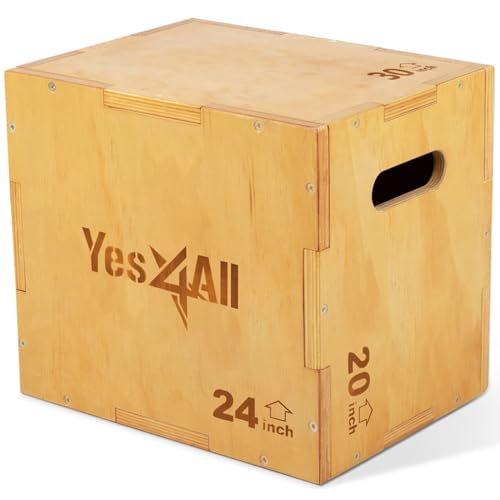 Yes4All
 3-in-1 Wooden Plyo Box
The standard wooden 3-in-1 in four size options, with beveled edges and a puzzle-joint build.
- Heights: 30/24/20 in on the large size; 24/20/16, 20/18/16, and 16/14/12 in sizes also sold
- Construction: Plywood panels, puzzle-joint assembly with internal bracing
Sources: Yes4All 3-in-1 wooden plyo box product documentation, Amazon listing specifications
Check price on Amazonor add to your Amazon cartChoose the wooden standard if your training is maximal-effort jumping where landing certainty outranks forgiveness, and your shins accept the terms. Read our Yes4All 3-in-1 Wooden Plyo Box review
Research-based assessment: manufacturer specifications and documentation, cross-checked against retailer listings and recurring themes in published owner feedback. We do not claim hands-on testing we have not performed.
FAQ
Questions, answered straight
How high can the Titan stack safely go?
Combinations above 30 in are possible from the four blocks, and the practical ceiling is set by strap security and floor grip rather than foam strength. Build tall stacks on rubber matting, strap every interface, and test with step-ups before jumps. Most home training lives at 30 in and below, where the system is at its most certain.
Can the blocks be used individually?
Yes, and owners do constantly: the low blocks serve as steps, mobility props, and deficit platforms. That secondary usefulness is part of the set's value against a single 3-in-1 box, which is one object with three heights rather than four objects with many.
Is the foam firm enough for a 200 lb athlete?
Owner experience at and above that bodyweight is generally positive for standard jump training, with compression noticeable but controlled. Athletes well above that, or training maximal jumps, are the wooden box's natural constituency and should weight the REP or Rogue picks accordingly.