Fix it
Doorway Pull-Up Bar Problems and Fixes: Slipping, Trim Damage, Flex, and Rattles
Fix common doorway pull-up bar problems: leverage bars shifting on the casing, tension bars loosening, trim dents and paint marks, frame flex, and grip foam wear.

Doorway bar problems divide into mount problems, frame problems, and wear problems, and the fix starts with naming which one you have. Work through these checks before the next session, because a bar that shifts or loosens mid-set is the one genuine hazard in an otherwise simple category.
Leverage bar shifts or knocks against the casing during reps
Confirm the top bar sits fully behind the casing and both lower pads sit flat against the wall and frame. Slow the reps down: leverage mounts are designed around strict movement. If shifting persists on a sound frame, install the safety brackets if your model includes them, or move the bar to a sturdier doorway.
Tension bar loosens between sessions
Re-tighten before every use as a standing rule, extend the bar evenly from both ends so the pads seat square, and check that the jamb faces are clean and parallel. A bar that will not hold tension on clean, solid jambs is telling you the frame is flexing; retire it from that doorway.
Dents, rings, or paint damage on trim
Add felt or dense foam padding under every contact point, widen contact where the design allows, and move training to a utility doorway if one exists. Existing shallow dents in painted wood usually fill and paint out; cracked casing means the loads were too much for that frame and the bar belongs elsewhere.
Bar flexes or creaks under load
Check every assembly bolt first, because leverage frames loosen at their joints before they flex in the tube. Retighten to snug, confirm your loaded weight is inside the rating, and inspect for hairline cracks at welds. Creaking that survives a bolt check and a weight check is a retirement signal, not a quirk.
Foam grips tear or spin on the bar
Spinning foam usually means the foam has stretched or moisture sits under it. Dry the bar, re-seat the grip, and wrap with athletic or bar tape for a serviceable fix. Torn grips are replaceable on mainstream models; tape is the honest budget answer for the rest.
Still stuck? Compare the current top picks
Full ranked list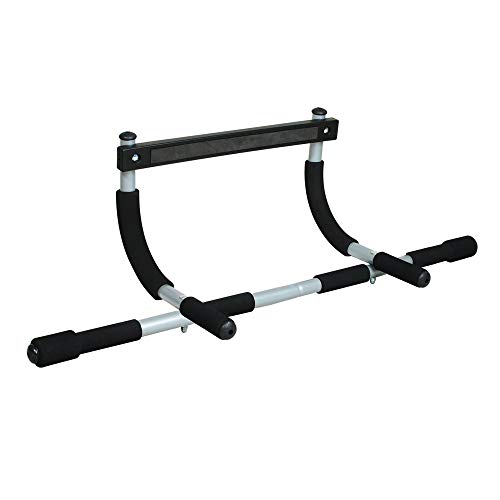
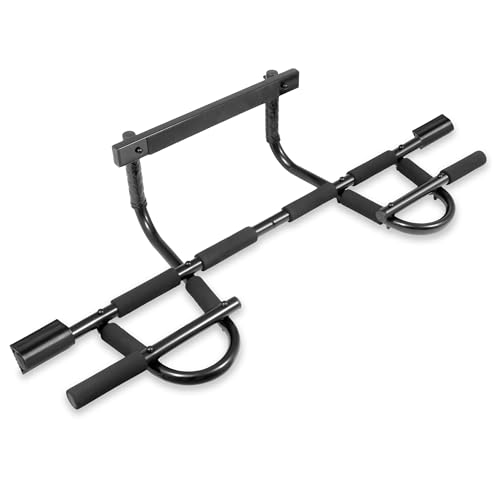
FAQ
Questions, answered straight
My doorway has no casing. Can I still use a pull-up bar?
Not a leverage bar. A tension bar inside solid jambs or a bracket bar screwed inside the frame are the doorway options; otherwise move to a wall mount on studs or a freestanding tower.
The bar feels solid on pull-ups but moves on chin-ups. Why?
Chin-ups change your swing path and pull direction slightly, which can unload one pad on some leverage frames. Slow down, keep the body quiet, and verify pad contact on both sides; persistent one-sided movement means the frame or casing is uneven.
How often should I inspect a doorway bar?
A quick check before every session: mount seated, pads in place, bolts snug, tension confirmed. A closer inspection monthly for foam wear, pad compression, and any new marks on the frame, which are early data about how the pairing is aging.