Buying guide
Doorway Pull-Up Bar Buying Guide (2027): Measure the Frame, Choose the Mount, Respect the Rating
How to buy a doorway pull-up bar: the three measurements that decide fit, leverage versus tension versus bracket mounts, capacity math, and grip geometry explained.
Take three measurements before anything else
Measure the clear opening width between the jambs, the width of the casing the bar will hook over, and the casing depth from the wall face. Add a fourth check: which side of the door the bar must mount on, because leverage bars sit opposite the door swing. Most returns in this category are measurement returns, and every product page in this hub lists its fit window so the comparison takes minutes.
Choose the mount by your housing, not your workout
Renters with plain casing get the best training value from leverage bars. Renters with delicate casing get tension bars and strict rules. Owners who can drill get bracket bars and the closest thing to gym feel a doorway offers. The workout is pull-ups in all three cases; the mount is a housing decision first and a training decision second.
Top picks from our research
Full ranked list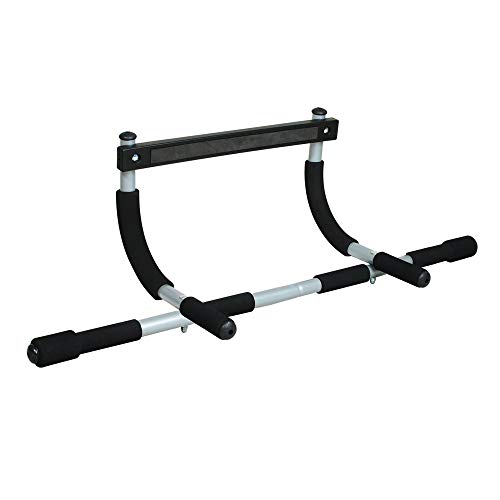
Do the capacity math honestly
Your training load is body weight plus shoes, plus any belt load, plus the dynamic bump at the bottom of a fast rep. Keep that total comfortably under the rating. A 300 lb class bar is the sensible default for adult men training long term, a 250 lb bar suits lighter users training strict, and 220 lb tension bars are light-use tools and are labeled as such here.
Grips: count what your door allows
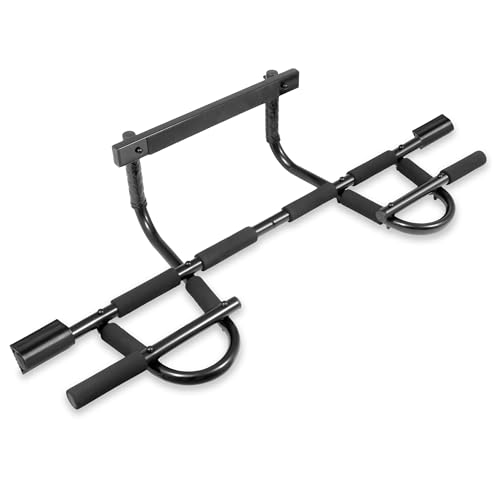
Neutral grips are the highest-value extra for shoulder comfort, wide grips need geometry or width to be real, and angled grips are a comfort refinement. Check grip claims against your door width using the fit notes in this guide, because stations that land on the casing are decorations, not grips.
Plan the bar's second job and its storage
Leverage bars double as floor tools for push-ups and sit-ups, which matters in small homes. They also need a flat storage spot. Tension and bracket bars stay out of the way by staying installed. Decide which daily routine you will actually keep, because the best bar is the one that is mounted when the workout starts.
FAQ
Questions, answered straight
What if my trim is wider than 3.5 inches?
Most leverage bars are out. Look at bracket bars that mount inside the frame, tension bars that ignore the casing entirely, or leave the doorway category for a wall-mounted bar where studs allow it.
Can two people share one doorway bar?
Yes, if both users sit under the rating and the fit suits the door. Leverage bars serve shared hallways best because they remove in seconds when the doorway needs to be a doorway again.
Do doorway bars work on doors that stay closed?
The bar mounts on the frame, not the door, and is normally used with the door open or removed from the swing path. Never train on a bar mounted over a door that someone else may open mid-set; pick a doorway with controlled traffic.