Cold focus: the enemy is the first ten minutes and slow corrosion. This guide favors equipment that works at near-freezing temperatures and routines that make winter sessions startable.
Best Garage Gym Equipment for Cold Climates (2027): Training Through an Unheated Winter
Cold garage picks and practices: rubber flooring as insulation, steel that tolerates freeze cycles, cardio warm-ups that heat the lifter, and bar care for damp cold.

Our top picks at a glance
ProsourceFit Rubber Gym Floor Tiles (Interlocking)
The platform zone under the cage and deadlift area, and a quieter, warmer floor everywhere else.
Sunny Health & Fitness Tornado LX Air Bike
Interval finishers and warm-ups in a corner of the bay, at a mid price under premium fan bikes.
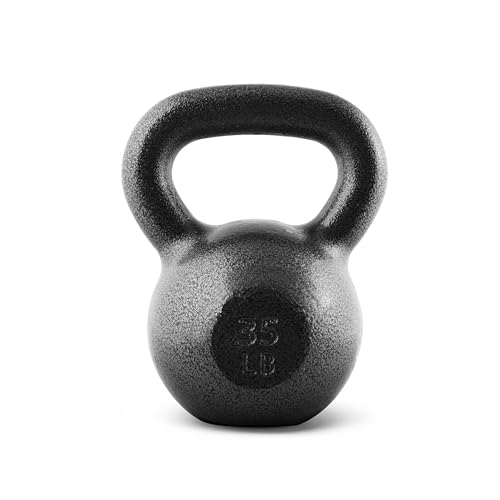
CAP Barbell Cast Iron Kettlebell
Hinge and carry training that needs no rack space and laughs at garage conditions.
The short answer
Cold garages are beaten by floor insulation, a fan bike warm-up, and mechanism-free iron, plus one habit: gloves for the first set while the bar is still at garage temperature. Everything in this guide trains at near freezing with no warm-up period for the equipment, which is the real cold-climate spec.
The picks, ranked
| Pick | Material | Footprint | Maintenance | Storage | Price |
|---|---|---|---|---|---|
| ProsourceFit Rubber Gym Floor Tiles (Interlocking)Best Cold Floor Fix | Dense rubber interlocking tiles, gym grade | Tile the cage and deadlift zone first (about 8 x 8 ft), expand as budget allows | - | - | Check price |
| Sunny Health & Fitness Tornado LX Air BikeBest Warm-Up Engine | - | About 48 x 26 in at the base; roll it to the bay wall between sessions | Periodic crank, pedal, and belt checks per the manual | - | Check price |
| CAP Barbell Cast Iron KettlebellBest Cold-Proof Tool | - | - | - | Bay corner on a mat offcut; bells line a wall neatly by size | Check price |
| Fitness Reality 810XLT Super Max Power CageBest Cold Anchor | - | About 50.5 x 46.5 in at the base; plan a lifting zone of roughly 8 x 8 ft around it | - | - | Check price |
Best Cold Floor Fix
ProsourceFit Rubber Gym Floor Tiles (Interlocking)
Dense rubber tiles that turn a concrete bay into a lifting surface and quiet the whole gym.
- Sold in tile packs; measure the bay zone and order the full platform area at once for batch consistency
- Coverage
- Dense rubber interlocking tiles, gym grade
- Material
- Tile the cage and deadlift zone first (about 8 x 8 ft), expand as budget allows
- Footprint
Strengths
- Rubber density absorbs deadlift set-downs and protects the slab in a way foam never will
- Interlocking edges let the floor grow bay by bay as the budget returns
- Insulates the lifter from cold concrete, which winter garage training feels immediately
Limitations
- Rubber odor needs airing in a closed garage for the first days
- Tiles are heavy to reposition once a full bay is laid, so the layout decision matters
| Coverage | Sold in tile packs; measure the bay zone and order the full platform area at once for batch consistency |
|---|---|
| Material | Dense rubber interlocking tiles, gym grade |
| Footprint | Tile the cage and deadlift zone first (about 8 x 8 ft), expand as budget allows |
| Care | Sweep grit weekly; grit under tiles is what scars concrete and tile alike |
What owners report
Commonly praised
- Noise reduction for early sessions is the praise neighbors indirectly endorse
- Seams stay tight under cage feet when the perimeter is wall to wall
- Easy hose-down cleaning after dusty seasons
Common complaints
- Edge curl on partial layouts until bordered or taped
- Color and texture vary slightly between production batches
- Cutting to fit around posts takes a sharp knife and patience
Recurring themes from owner reviews on retailers and forums, summarised by our editors. Updated October 2026.
Sources: ProsourceFit rubber tile product documentation, Amazon listing specifications
Best for: The platform zone under the cage and deadlift area, and a quieter, warmer floor everywhere else.
Skip if: You plan to park a hot car on the same tiles daily; dedicate the gym bay or use stall mats under tires.
Best Warm-Up Engine
Sunny Health & Fitness Tornado LX Air Bike
A fan bike for short, brutal conditioning finishers, with moving arms for full body intervals.
- About 48 x 26 in at the base; roll it to the bay wall between sessions
- Footprint
- Air fan with moving arms; effort-scaled, no settings to dial
- Resistance
- Intervals and warm-ups; plan sessions in minutes, not miles
- Use profile
Strengths
- Resistance rises with your effort, so one bike serves a first-week beginner and a fit lifter
- Compact footprint compared with a treadmill, and it rolls on transport wheels between corners
- Moving handlebars make it a full-body finisher, not just a leg tool
Limitations
- Fan noise scales with effort and there is no quiet mode
- Belt and crank maintenance is an owner chore on a schedule, like every fan bike
| Footprint | About 48 x 26 in at the base; roll it to the bay wall between sessions |
|---|---|
| Resistance | Air fan with moving arms; effort-scaled, no settings to dial |
| Use profile | Intervals and warm-ups; plan sessions in minutes, not miles |
| Maintenance | Periodic crank, pedal, and belt checks per the manual |
What owners report
Commonly praised
- Finisher effectiveness per dollar is the praise; ten minutes ends workouts properly
- Frame feels stable during standing sprints for most owners
- Simple console covers intervals without app dependence
Common complaints
- Seat comfort on longer pieces divides owners; many swap the saddle
- Pedal and crank creaks appear if hardware checks are skipped
- Display is basic next to connected bikes
Recurring themes from owner reviews on retailers and forums, summarised by our editors. Updated October 2026.
Sources: Sunny Health & Fitness Tornado LX documentation, Amazon listing specifications
Best for: Interval finishers and warm-ups in a corner of the bay, at a mid price under premium fan bikes.
Skip if: You want long quiet steady-state rides; fan bikes are loud and built for efforts, not cruising.
CAP BarbellBest Cold-Proof Tool
CAP Barbell Cast Iron Kettlebell
Single cast iron bells for swings, goblet work, and carries along the driveway side of the bay.
- Single piece cast iron, black finish
- Construction
- Sold as singles across a wide weight range; buy the hinge weight you can swing with form
- Sizes
- Bay corner on a mat offcut; bells line a wall neatly by size
- Storage
Strengths
- One-piece cast iron is effectively immortal in a garage; drops on mats are a non-event
- Window and handle suit two-handed swings and goblet squats for most hand sizes
- Buying singles one weight at a time matches how kettlebell strength actually grows
Limitations
- Handle finish is utilitarian and can feel rough until it wears in or meets chalk
- A useful set still accumulates into real floor weight stored in a corner
| Construction | Single piece cast iron, black finish |
|---|---|
| Sizes | Sold as singles across a wide weight range; buy the hinge weight you can swing with form |
| Storage | Bay corner on a mat offcut; bells line a wall neatly by size |
| Use note | Train swings over mats or the driveway, never over bare concrete you care about |
What owners report
Commonly praised
- Indestructibility is the praise; owners report years of driveway carries
- Balance and handle shape feel right for swings at common weights
- Price per bell undercuts coated and competition lines clearly
Common complaints
- Occasional casting seams need a file pass on the handle underside
- Weight markings wear over time outdoors
- One bell per purchase makes pair math a planning exercise
Recurring themes from owner reviews on retailers and forums, summarised by our editors. Updated October 2026.
Sources: CAP Barbell kettlebell product documentation, Amazon listing specifications
Best for: Hinge and carry training that needs no rack space and laughs at garage conditions.
Skip if: You need a matched pair in competition dimensions or a coated bell for indoor floors.
 Fitness Reality
Best Cold Anchor
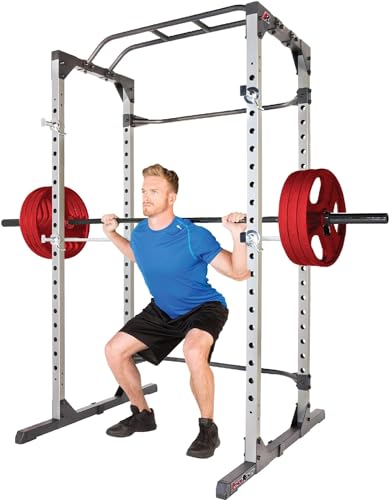
Fitness Reality 810XLT Super Max Power Cage
A full power cage with multi-grip pull-up bar and a listed 800 lb capacity, sized for one bay.
- About 50.5 x 46.5 in at the base; plan a lifting zone of roughly 8 x 8 ft around it
- Footprint
- About 83.5 in tall; confirm pull-up head clearance against your ceiling
- Height
- 800 lb listed cage capacity on this model
- Capacity
Strengths
- Full cage safety for solo garage lifting, with spotter bars that make alone training rational
- Multi-grip pull-up bar adds angled and neutral grips without a second station
- Attachment ecosystem (lat pulldown, dip bars, landmine) lets the same footprint grow for years
Limitations
- Hole spacing is standard rather than Westside through the bench zone, so bench pin height is a compromise
- Listed capacity suits most home lifters but the strongest will shop heavier steel eventually
| Footprint | About 50.5 x 46.5 in at the base; plan a lifting zone of roughly 8 x 8 ft around it |
|---|---|
| Height | About 83.5 in tall; confirm pull-up head clearance against your ceiling |
| Capacity | 800 lb listed cage capacity on this model |
| Frame | 2 x 2 in steel uprights with 1 in holes, per the listing |
| Included | Multi-grip pull-up bar, J-hooks, and safety spotter bars |
What owners report
Commonly praised
- Stability for the price is the dominant theme; the cage feels planted once assembled and loaded
- Assembly is a one-afternoon job with clear hardware sorting according to owners
- Pull-up bar grips get used daily, not just on back day
Common complaints
- Spotter bar adjustment is slower than flip-down safeties on pricier cages
- Powder coat chips at the J-hook contact points over time
- Lat attachment, if added, makes the total footprint longer than buyers planned
Recurring themes from owner reviews on retailers and forums, summarised by our editors. Updated October 2026.
Sources: Fitness Reality 810XLT product documentation, Amazon listing specifications
Best for: The anchor of a garage build: squats, bench, rack pulls, and pull-ups inside one steel footprint.
Skip if: Your ceiling is under about 7 ft, or you want Westside hole spacing and band pegs out of the box.
FAQ
Questions, answered straight
Is it safe to lift with a bar at near-freezing temperature?
The bar is fine; the hands are the limit. Start with gloves or straps for the first work sets, warm the hands on the bike, and keep chalk dry in a sealed tub. Steel loses no meaningful strength at garage winter temperatures; grip and comfort are the honest constraints.
Does cold damage a rower's monitor or chain?
Prolonged damp cold is harder on electronics than dry cold. Keep the monitor end covered, the chain lightly oiled, and bring batteries or the monitor itself indoors during the coldest damp weeks if the manual allows removal. Dry cold alone bothers a RowErg very little.
What heating is worth adding?
A small radiant heater aimed at the lifting zone for the session's first minutes beats trying to heat the whole bay air. Pair it with the tiled floor and the warm-up bike and most lifters train comfortably in gear they would wear for a winter run.