In-depth review
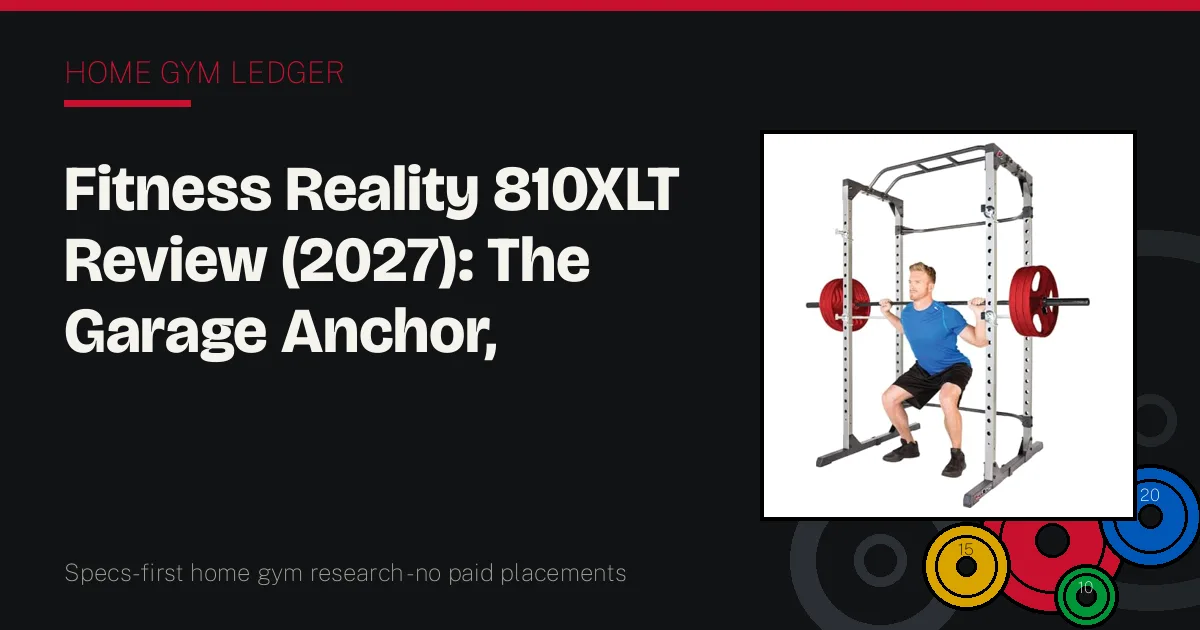
Fitness Reality 810XLT Review (2027): The Garage Anchor, Audited by the Bay
Research review of the 810XLT power cage for garage builds: true station footprint, ceiling math, solo safety, attachment growth, and where heavier steel earns its money.
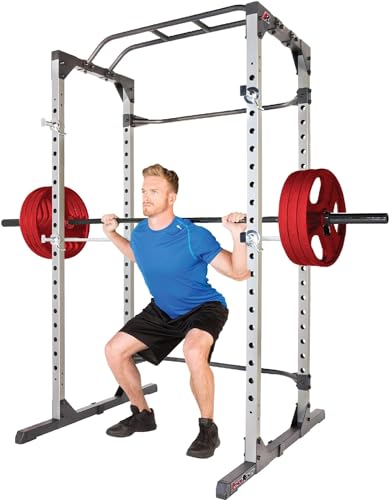
Fitness Reality 810XLT Super Max Power Cage
A full power cage with multi-grip pull-up bar and a listed 800 lb capacity, sized for one bay.
- About 50.5 x 46.5 in at the base; plan a lifting zone of roughly 8 x 8 ft around it
- Footprint
- About 83.5 in tall; confirm pull-up head clearance against your ceiling
- Height
- 800 lb listed cage capacity on this model
- Capacity
Our verdict
The 810XLT is the correct first cage for most garages because it prices like a starter and behaves like infrastructure. The station it creates, cage plus lifting zone, covers squats, bench, rack pulls, and pull-ups with genuine solo safety, and its attachment list lets the same steel absorb a lat pulldown or dip station later instead of being replaced. Its limits are the spec sheet's honesty: standard hole spacing, a capacity that suits home loads rather than elite ones, and J-hook finish that wears. In a one or two bay build with a normal budget, those limits rarely bind before the lifter's own ceiling does.
What we like
- Full cage safety for solo garage lifting, with spotter bars that make alone training rational
- Multi-grip pull-up bar adds angled and neutral grips without a second station
- Attachment ecosystem (lat pulldown, dip bars, landmine) lets the same footprint grow for years
What to watch out for
- Hole spacing is standard rather than Westside through the bench zone, so bench pin height is a compromise
- Listed capacity suits most home lifters but the strongest will shop heavier steel eventually
Who it is for
Garage lifters building a first full cage station for solo barbell training, with plans to grow by attachments rather than replacement.
The station footprint, not the cage footprint
The base is about 50.5 by 46.5 in, but the station is the honest number: roughly 8 by 8 ft once the bar, the lifter, and loading clearance are counted, more if a lat attachment lengthens the rear. Site that square against the back wall and the bay organizes itself around it. Owners who budgeted only the base dimensions are the ones rearranging a garage in month two.
Ceiling math and the pull-up test
At about 83.5 in tall, the cage fits 8 ft ceilings with inches to spare, but the pull-up question is the lifter: head and shoulders must clear above the bar without meeting drywall or a door track. Garage door openers and tracks steal ceiling in exactly the wrong places, so site the cage outside the track's sweep and test a full hang before the first heavy cycle.
Solo safety is the real product
A garage lifter trains alone, and the cage's full-length safety bars convert a missed bench or squat from an emergency into an inconvenience. Set the safeties with intention for each lift, bench safeties a breath above the chest with an arch, squat safeties just below the bottom position, and practice one failed rep at light load so the system is proven before it is needed.
Where heavier steel earns its money
Lifters approaching the listed capacity, programs built on pin pulls and partials that slam the frame, and anyone who wants Westside bench spacing should shop the next steel class. Everyone else is buying capacity they will not use for years. The 810XLT's honest role is the five-to-ten-year cage for general strength, and owner feedback says it plays that role well.
Key specifications
- Footprint
- About 50.5 x 46.5 in at the base; plan a lifting zone of roughly 8 x 8 ft around it
- Height
- About 83.5 in tall; confirm pull-up head clearance against your ceiling
- Capacity
- 800 lb listed cage capacity on this model
- Frame
- 2 x 2 in steel uprights with 1 in holes, per the listing
- Included
- Multi-grip pull-up bar, J-hooks, and safety spotter bars
What owners report
Commonly praised
- Stability for the price is the dominant theme; the cage feels planted once assembled and loaded
- Assembly is a one-afternoon job with clear hardware sorting according to owners
- Pull-up bar grips get used daily, not just on back day
Common complaints
- Spotter bar adjustment is slower than flip-down safeties on pricier cages
- Powder coat chips at the J-hook contact points over time
- Lat attachment, if added, makes the total footprint longer than buyers planned
Recurring themes from owner reviews on retailers and forums, summarised by our editors. Updated October 2026.
Sources: Fitness Reality 810XLT product documentation, Amazon listing specifications
Also consider
Titan Fitness Wall Mounted Pull Up Bar
A stud-mounted multi-position bar that frees the cage for lifting while pull-ups live on the wall.
- Mounting: Wall studs with lag bolts; follow the manual's stud spacing and hardware exactly
- Footprint: Zero floor footprint; projects from the wall per the listing depth
Sources: Titan Fitness wall mounted pull up bar documentation, Amazon listing specifications
Check price on Amazonor add to your Amazon cartNot a cage substitute, but the pairing that upgrades it: wall pull-ups free the cage bar for attachments and band work full time.
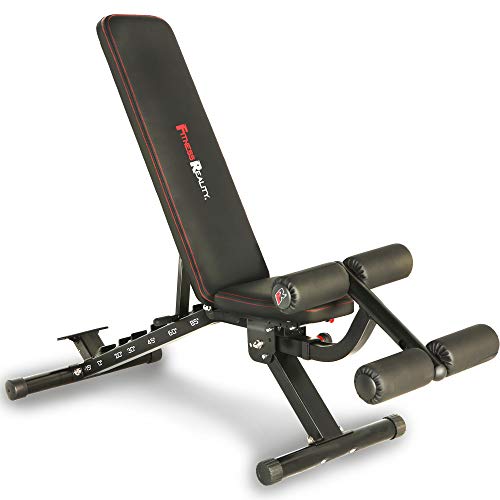 Fitness Reality
 2000 Super Max XL Adjustable Bench
A high-capacity flat and incline bench with a wide back pad, built to live inside the cage.
- Positions: Flat and multiple incline angles; check the listing for the exact angle set
- Footprint: About 53 in long in use; stores against the bay wall or upright in a corner slot
Sources: Fitness Reality 2000 bench product documentation, Amazon listing specifications
Check price on Amazonor add to your Amazon cartThe bench built for this cage's interior: capacity headroom and pad width that match the station the cage creates.
Research-based assessment: manufacturer specifications and documentation, cross-checked against retailer listings and recurring themes in published owner feedback. We do not claim hands-on testing we have not performed.
FAQ
Questions, answered straight
Does the 810XLT need to be bolted to the floor?
Most owners train on it unbolted over mats, and the frame's footprint keeps it planted under normal lifting. Bolting becomes worth discussing for aggressive rack pulls and swinging pull-up styles. If you bolt, you are into concrete anchors and a permanent layout decision, so live with the layout first.
Will a 7 ft bar load comfortably inside it?
Yes: the cage width is designed for standard 7 ft Olympic bars with sleeve room outside the uprights for plate loading. In a narrow bay, count that loading swing on both sides before final placement; it is the clearance most often forgotten.
Can two people assemble it in an afternoon?
Owners consistently describe a two-to-three-hour, two-person build with ordinary tools. Sort the hardware before starting, keep bolts finger tight until the frame is squared, and assemble it in its final position; a finished cage is an awkward thing to walk across a garage.