Fix it
Adjustable Bench Problems and Fixes: Wobble, Ladder Play, Sliding Pads, and Squeaks
Fix common adjustable bench problems: wobble at incline, ladder teeth that seat loosely, pads that slide or compress, squeaks at the hinge, and wheels that drag.

A bench has three jobs: stay still, hold its angle, and present the same pad every session. When one degrades, the cause is usually at a joint, a foot, or the floor rather than in the frame. Diagnose in that order with the bench unloaded, and never train heavy on a bench whose adjustment you cannot seat with certainty.
Bench wobbles at incline but feels fine flat
Check that the ladder is fully seated in its tooth on both sides and that the support foot sits flat. Incline loads the ladder joint in a way flat pressing does not. A tooth that looks seated from above can be riding high on one side; reseat it under the pad's own weight before loading.
Ladder or pin has developed play over time
Inspect the contact teeth or pin holes for rounding and the fasteners at the hinge for looseness. Tighten hinge hardware to spec and clean grit from the ladder track. Play that survives cleaning and tightening on a heavily used bench is wear, and the maker or a replacement part is the honest fix.
Body slides down the pad at steep incline
Raise the seat section if your bench adjusts, since that is its purpose. If the seat is already set, check pad vinyl for polishing from use and clean it; a textured cover or pad replacement restores grip. Chalk on a shirt is a training workaround, not a repair.
Squeak or creak during sets
Localize it by pressing on sections unloaded: hinge, ladder seat, and feet are the usual sources. Tighten the joint you find, confirm feet are fully threaded or seated, and place the bench on matting to rule out floor noise, which is the culprit more often than the bench.
Wheels drag or the bench will not sit level
Wheels should contact the floor only when the bench is tilted to move. If they touch at rest, check for a bent bracket or a foot pad worn shorter than its partner. Replace worn feet in pairs so the bench returns to a level sit.
Still stuck? Compare the current top picks
Full ranked list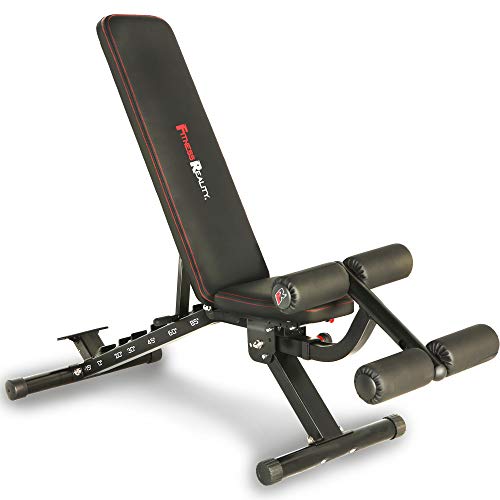
FAQ
Questions, answered straight
Is a small amount of pad movement normal?
A firm pad should feel fixed. Slight vinyl shift over foam in hot garages can occur, but a pad that slides on its board or a backrest with lateral play at the hinge deserves inspection before heavy use.
Can I replace just the pad on my bench?
On most mid and premium benches, yes: pads bolt to the frame and makers or third parties sell replacements. Measure bolt spacing before ordering, and treat a fresh dense pad as the single best revival for an older bench.
My bench rocks on one corner. Shim or return?
First rule out the floor by moving the bench a few feet and retesting. If the rock follows the bench, check foot seating and frame bolt torque in sequence. A rock that persists after that sequence is a warranty conversation.