Buying guide
Adjustable Bench Buying Guide (2027): Height, Pad Gap, Ladder Design, and Honest Capacity Math
How to buy an adjustable bench: measure the right height for your body, understand pad width and gap, compare ladder and pin systems, and calculate capacity as bodyweight plus load.
Height first, because your feet decide
Sit on your current bench or a box of similar height with your pressing stance. Feet flat, knees comfortable, lower back able to arch naturally: that is your working height window, for most lifters somewhere in the 17 to 18 inch band. A bench outside it will be felt on every set of every pressing session, unlike a capacity figure you may never approach. When in doubt between two heights, the lower one is easier to adapt with a mat under your feet than a tall bench is to forgive.
Pad width, length, and the gap
Standard pads run about 11 to 12 inches wide and support the shoulder blades while letting arms move. Longer pads serve tall lifters; wider pads serve dedicated flat pressers. The seat gap deserves a physical test where possible: lie where you would press and notice where the junction falls relative to your hips. A gap under your lower back is trivia; a gap exactly at the hip hinge is an annoyance you will meet weekly.
Top picks from our research
Full ranked list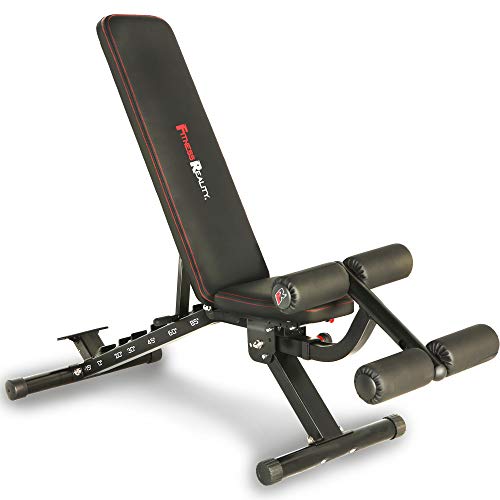
Adjustment systems and angle menu
List the angles your program actually uses, usually flat, a shallow incline, a steep incline, and occasionally decline and near upright for seated work. Four to seven well made positions cover that list. More positions help only when the locking system stays positive at each one, so prefer engagement quality over count, and confirm a seat adjustment exists if you train above 45 degrees.
Capacity math without the brochure
Add your bodyweight, the total weight in your hands or on the bar path above the bench, and a margin for the dynamic moment you sit down loaded. Compare that number to the maker's rating, noting whether the rating is stated for the flat position only, as incline ratings are sometimes lower. Mid tier benches in the 700 to 850 lb band cover nearly every home lifter honestly.
Feet, wheels, and the floor it lives on
Wide feet and rubber caps keep a bench tracking straight during dumbbell kickbacks and seated work. Wheels should lift clear when the bench is set down. On very smooth floors, a mat under the bench is part of the product, not an accessory, and it protects both the floor and your setup consistency.
FAQ
Questions, answered straight
Can one bench serve both rack pressing and dumbbell work?
Yes, and most benches in this guide are chosen for exactly that double duty. Check rack length fit for the barbell side and low height plus pad grip for the dumbbell side, and one bench genuinely covers both.
What is FID and do I need it?
FID means flat, incline, decline in one bench. Need is program based: decline pressing, anchored core work, and some shoulder friendly angles use it. If your last year of training never declined, a great flat and incline bench beats a mediocre FID.
How long should a good bench last?
Frames at mid tier and above are decade items. Pads and vinyl are the wear surface, and better brands sell replacements. Ask about pad availability before buying any bench you plan to keep, because a fresh pad renews the whole product.