Fix it
Wall-Mounted Pull-Up Bar Problems and Fixes: Movement, Creaks, Loose Lags, and Grip Wear
Fix common wall-mounted pull-up bar problems: bracket movement, loosening lag bolts, creaks under load, bars mounted out of level, and worn grip surfaces.
A wall bar should be the most boring object in the gym: silent, still, and forgotten. Any new movement, sound, or visible gap at the wall is information to act on before the next heavy session. These fixes run from re-torque routines to the point where re-installation is the honest answer.
Bracket moves or a gap opens at the wall under load
Stop loading the bar. Check whether every lag is in structure: a bolt that spins or pulls was in drywall or a missed stud edge. Re-anchor into the stud center with proper pilot holes, or shift the span to sound structure. Movement at the wall is never a tighten-and-hope fault.
Lag bolts loosen over the first weeks
Wood compresses and hardware settles under cyclic load. Re-torque all lags after the first week and again at one month, then fold a torque check into monthly gym maintenance. A bolt that loosens repeatedly after correct installation needs a longer or larger replacement and a fresh pilot hole.
Creaking during reps
Creaks usually come from bracket-to-wall or bracket-to-bar interfaces, not the steel itself. Tighten frame bolts in sequence, confirm the bar is level, and check for paint or debris trapped under a bracket foot. A creak that tracks one specific bolt localizes the fix; a creak with visible movement is the stop-and-re-anchor case above.
Bar is not level after installation
An out-of-level bar trains one side harder and looks wrong forever. Loosen one bracket, re-level with a long level across the bar itself rather than the wall, and re-torque in small steps. If stud placement forced the error, slotted bracket holes or a corrected span are the durable fixes.
Grip surface worn smooth or foam splitting
Polished powder coat responds to chalk or a tape wrap at the hand positions. Split foam on multi-grip bars can be cut away and replaced with bar tape or aftermarket grips. Treat grip surfaces as scheduled wear items on high-volume bars.
Still stuck? Compare the current top picks
Full ranked list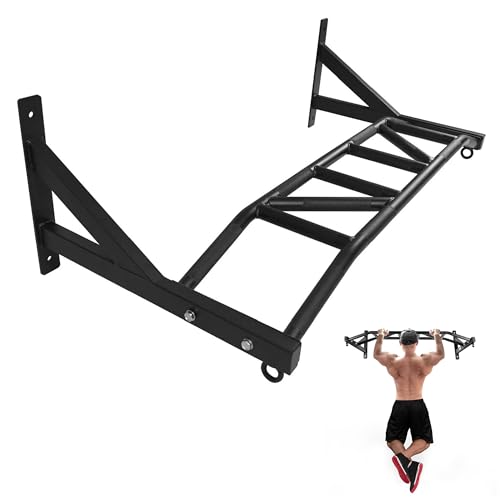
FAQ
Questions, answered straight
How often should I re-check mounting hardware?
After the first week, at one month, and then quarterly for home use. Any change in sound or feel earns an immediate check regardless of schedule.
A lag bolt snapped during installation. What now?
Extract the broken piece if it protrudes, or drill a fresh pilot beside it into sound stud wood per the bracket layout. Snapping usually means no pilot hole or an undersized one in hard, dry lumber; correct the process, not just the bolt.
Can I move a wall bar to a new home later?
Yes. The bar unbolts and travels; the wall keeps holes that fill and paint in the usual way. Keep the hardware and instructions together so the second install starts from the full kit.