Buying guide
Hip Thrust Machine Buying Guide (2027): Formats, Pad Geometry, and Resistance Curves
How to buy a hip thrust or glute machine: pick the format for your home, check back pad height against your body, understand band versus plate resistance, and cost the plates honestly.
Pick the format that fits your home first
Plate loaded drives are the best training tools and the worst houseguests. Platforms and benches serve the barbell you already own. Band machines serve the room you actually have. Write down where the equipment lives at rest, not just where it trains, and let that answer rank the formats before any product comparison begins.
Measure pad height against your own body
Sit on the floor with your back against a wall and measure to the bottom of your shoulder blades: your ideal back support top lands near that line, typically 14 to 16 in. Fixed height products outside your range will feel wrong on every rep, and no amount of brand reputation fixes geometry that does not fit.
Top picks from our research
Full ranked list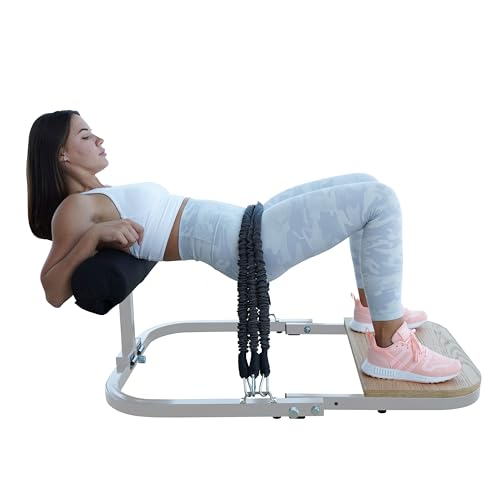
Understand the resistance curve you are buying
Plate pivots load evenly and log exactly. Bands load hardest at lockout and lightest at stretch, which many lifters love for glutes and some programs cannot use precisely. Barbells on a bench load constantly and demand the most skill. Match the curve to how you program: percentage based plans need plates, effort based plans thrive on any of the three.
Hip comfort is a capacity spec
At working loads the hip interface carries everything. Wide pads, contoured bars, and belt systems are not comfort luxuries; they are what let the target muscle be the limiting factor. If owner feedback for a model mentions bruising at loads you plan to use, believe it and shop up a tier.
Cost the whole station
A plate loaded drive needs iron, ideally a few hundred pounds of it. A bench needs a bar, plates, and a quality hip pad. A band machine needs only its replacement bands over time. Compare stations complete, in your room, over three years, and the value order in this guide often rearranges itself honestly.
FAQ
Questions, answered straight
How often should I hip thrust for results?
Most programs in the research and coaching literature use one to three thrust exposures a week, mixing heavy low rep work with lighter high rep variations. The machine you buy should make your chosen frequency effortless to repeat.
Can hip thrust equipment help with back pain from deadlifts?
Thrust training loads the glutes hard with a neutral, supported spine, which is why it appears in return to training programs. Individual conditions vary; treat equipment as training tools, not treatment, and follow professional guidance for pain.
What is a glute bridge versus a hip thrust on these machines?
The bridge is the floor based, shorter range cousin; the thrust is the elevated back, full range version. Most machines and benches here support both, with the thrust as the primary loaded pattern.