Fix it
Calf Raise Machine Problems and Fixes: Lost Stretch, Knee Pad Pain, Pivot Squeaks, and Sliding Feet
Fix common calf machine problems: heels that cannot drop, knee pads that hurt, noisy pivots, feet sliding at the stretch, and safety handles that stick.
Calf machine problems usually steal range or comfort rather than stopping training outright, which makes them easy to ignore and costly to keep. A heel that stops two inches early or a pad that shifts every set quietly rewrites the exercise. These fixes restore the movement the machine was bought for, starting with the checks that take under a minute.
Heels will not drop into a full stretch
Confirm your forefoot sits far enough back on the platform and that no mat or debris limits the heel path. On seated machines, check the knee pad is not set so low that it pins your thighs and blocks ankle travel. If the frame itself stops the movement early at every setting, the machine's geometry is the limit and tempo work at the available stretch is the honest workaround.
Knee pads hurt or leave the thighs bruised
Reposition the pads to sit just above the knee on the lower thigh, not across the kneecap, and spread the load by checking both pads contact evenly. A thin towel layer helps while technique settles. Persistent pain at moderate loads points to pads that have compressed with age and are ready for replacement.
Pivot squeaks or feels gritty under load
Clean the pivot area of dust and chalk, check its hardware for tightness, and lubricate only where the manufacturer specifies, with the product they specify. Grittiness that survives cleaning usually means a bushing or bearing is wearing, which is a parts order, not a heavier wrench.
Feet slide forward at the deepest stretch
Clean the platform: rubber dust and smooth shoe soles are the usual pair behind sliding. Train in flat, grippy shoes rather than cushioned runners, and set your stance before loading rather than shuffling under a loaded arm. Worn platform texture can be refreshed with grip tape rated for gym use.
Safety handle sticks or will not engage cleanly
The handle and its stop take the machine's resting load, so check for bent contact points, debris in the travel path, and loose mounting bolts. Engage the safety unloaded and watch its travel. A safety that needs force is telling you something is misaligned; find it before the next loaded session.
Still stuck? Compare the current top picks
Full ranked list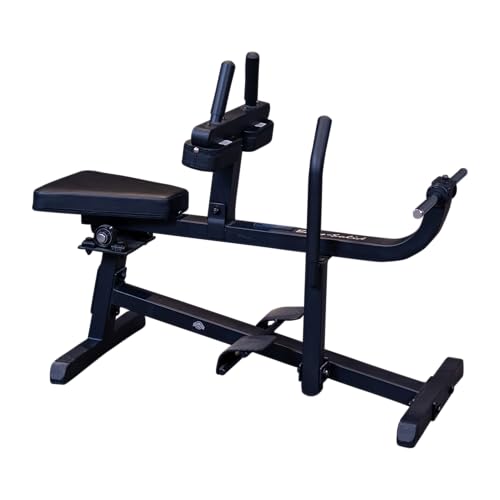
FAQ
Questions, answered straight
Is some pivot play normal on a plate loaded calf machine?
A small amount of movement is common on home pivots and is harmless if it does not grow. Play that increases, clicks under load, or shifts your knee position mid rep should be inspected before heavy training continues.
Why do my knees ache after seated calf raises?
Usually pad placement: pressure across the joint instead of the thigh above it. Reposition, reduce load for a week, and rebuild. Pain inside the joint that persists off the machine deserves a professional opinion.
How often should pads and pivots be inspected?
Give both a quick check monthly in a busy gym: pad firmness and vinyl, pivot tightness and smoothness, post sleeves for grooves. Calf machines are simple, and five minutes keeps them that way.