Buying guide
Calf Raise Machine Buying Guide (2027): Seated vs Standing, Stretch Depth, and Load Headroom
How to buy a calf raise machine: choose seated or standing by muscle target, judge the platform by its bottom position, size the plate posts for your future loads, and fit the pads before the first set.
Choose the knee angle first
Bent knee means soleus. Straight knee means gastrocnemius joins in. That single anatomical fact should make the first decision for you, based on what your current program lacks. Most home gyms are short on soleus work because it is hard to load without a machine, which is why seated units are the common first purchase, with standing leverage frames following when squat crossover value enters the picture.
Interrogate the bottom position
Stand on the platform description the way you would stand on the machine. How low can the heel go before the frame stops it? Does the load stay on at that depth, or does the geometry slacken? The stretched position is where calf training earns its results, and a machine that short changes it cannot be fixed with more weight.
Top picks from our research
Full ranked list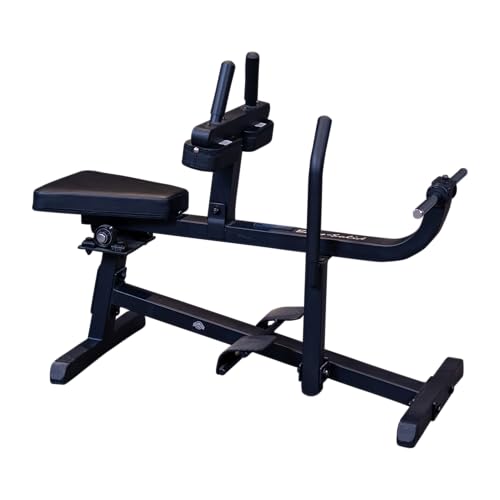
Size posts for the lifter you are becoming
Calf loads climb fast because the muscles are built for high force and the lever is short. Buy post length and load rating for the loads you will plausibly reach in two years, and remember that plate thickness decides how much of a post you can actually use. Iron plates remain the heavy calf trainer's friend.
Fit the pads like you fit shoes
On seated machines the pad should contact the lower thigh just above the knee, spread its pressure, and hold still when the safety releases. On standing machines the shoulder pads should settle the load without shrugging you into a bad neck position. If owner reports cluster around pad misery on a model, believe them: it will be your report too.
Respect the safety routine
Every plate loaded calf machine has a lockout or safety handle, and using it between every set is part of the exercise, not an optional courtesy. Choose a design whose safety you can reach from the working position without shifting your feet or knees, because a safety that is awkward is a safety that gets skipped.
FAQ
Questions, answered straight
How heavy do home calf raises actually get?
Strong lifters commonly work with several plates per side on seated machines once full range is mastered. That is why post length and ratings dominate this guide: the ceiling arrives sooner than buyers expect.
Should my heels hang off the platform edge?
The ball of the foot stays fully supported while the heel travels below platform level for the stretch. If your whole forefoot is sliding to find range, the platform is too tall or too shallow for the machine's job.
Is slow tempo or heavy load more important?
Both, sequenced: master slow tempo and pauses at the stretch with moderate load first, then let load climb inside that technique. Machines with smooth pivots support the first phase and the second equally.