In-depth review
BowFlex SelectTech 840 Kettlebell Review (2027): The Dial Bell, With Its Gaps Named
Full research review of the BowFlex SelectTech 840: six dial settings and their gaps, shell size and rack feel, lock routine, and who the 40 lb class leader actually suits.
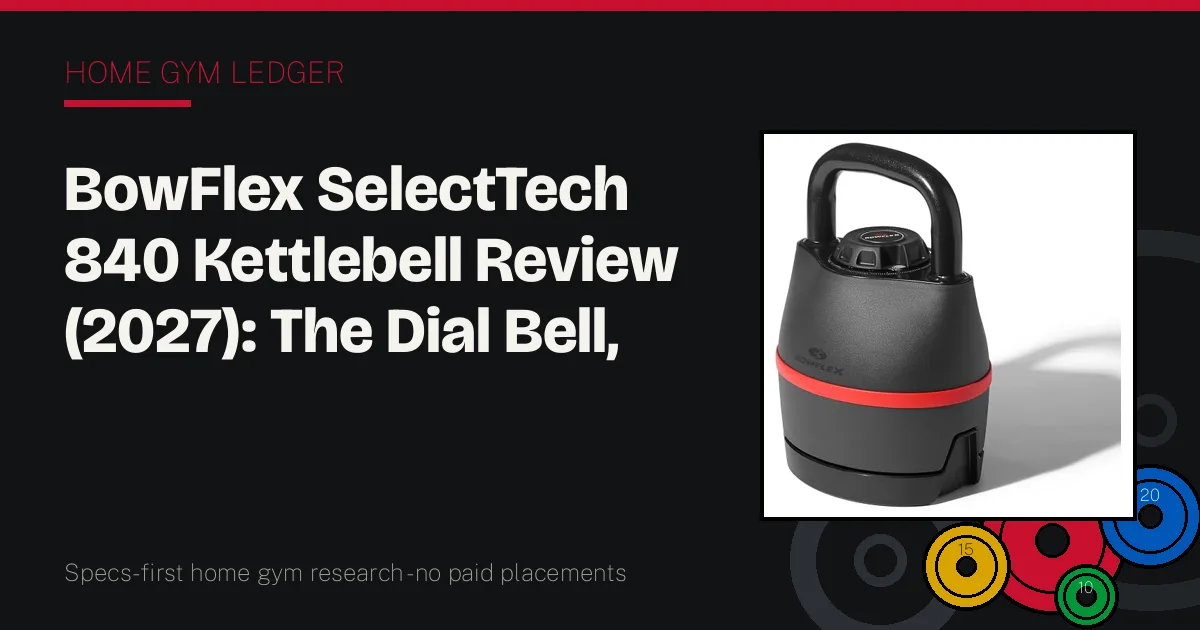

BowFlex SelectTech 840 Kettlebell
The dial kettlebell: six weights from 8 to 40 lb in one molded shell.
- 8-40 lb, 6 settings
- Weight range
- 8, 12, 20, 25, 35, 40 lb (uneven steps)
- Increments
- Dial selector, tray required for changes
- Mechanism
Our verdict
The 840 is the adjustable kettlebell most home lifters should start with, and its review can be honest about why: nothing else changes weight this fast, stores this small, or teaches this easily. Its flaws are printed in its own spec table. The six settings skip weights real programs want, the molded shell is oversized next to a cast 40, and the balance in the rack position tells experienced users on every rep that this is a mechanism wearing a kettlebell's shape. For program training, conditioning, and learning the patterns, those trade-offs are worth it. For kettlebell craft, they are the whole story, and this guide sells the REP and Kings bells to exactly those readers.
What we like
- Dial change is seconds fast and the selected weight is unambiguous
- Six settings replace a starter rack of fixed bells in one tray footprint
- Smooth molded shell is forgiving on floors and on forearms during learning
What to watch out for
- Steps are coarse and uneven: 8, 12, 20, 25, 35, 40 lb skips weights many programs call for
- Shell is larger than a cast 40 lb bell and the balance in the rack position feels different
- Plastic dial components set a hard no-drop rule
Who it is for
Home lifters running kettlebell programs and conditioning up to 40 lb, especially in shared living spaces.
The six settings, and the missing ones
The dial offers 8, 12, 20, 25, 35, and 40 lb. Notice the geography: a kind ladder at the bottom, then jumps of 8, 5, 10, and 5 lb. Programs written in 5 lb steps need workarounds at 15 and 30 lb, usually rep or tempo changes. Owners split predictably: follow-along trainers barely notice, because the video chooses the weight; program followers notice weekly. Check your program's actual weights against this list before buying, it takes two minutes and decides the purchase.
Shell, size, and the rack position
At 8.8 x 7 x 12.5 in the shell is larger than a cast iron 40 lb bell, and its weight distribution sits differently against the forearm in cleans and presses. Beginners often prefer it: smooth, no edges, forgiving contact. Experienced kettlebell users describe the same geometry as vague. Both are describing the same bell accurately, which is why intended user matters more than verdict here.
The dial routine and lock discipline
Changes happen in the tray: set the bell down, turn the dial to a positive stop, lift. The mechanism will not select cleanly half-seated, which owners learn to treat as a feature. The standing rule from the troubleshooting page applies: a controlled test lift before the first swing of each set, every set, until it is boring. Boring is the goal.
Ownership over time
Long-term themes are consistent: the dial keeps working, the tray keeps the corner tidy, and the regrets are range regrets, either the missing steps or the day 40 lb stopped being heavy for two-hand work. Nobody's review reads like the mechanism surprised them, which is the strongest thing that can be said for a selector product in a swinging category.
Key specifications
- Weight range
- 8-40 lb, 6 settings
- Increments
- 8, 12, 20, 25, 35, 40 lb (uneven steps)
- Mechanism
- Dial selector, tray required for changes
- Handle
- Molded handle, about 28 mm diameter per listing
- Shell
- Molded composite shell over internal plates, 8.8 x 7 x 12.5 in
What owners report
Commonly praised
- One bell covers a whole follow-along program
- Changes are fast enough for circuits
- Tray keeps it tidy in a living room corner
Common complaints
- Missing mid weights, especially around 30 lb, frustrate program followers
- Bulk in the rack position bothers experienced kettlebell users
- Dial requires the bell seated in its tray, so changes happen at base camp
Recurring themes from owner reviews on retailers and forums, summarised by our editors. Updated October 2026.
Sources: BowFlex SelectTech 840 product documentation, Amazon listing specifications
Also consider
Kettlebell Kings Adjustable Kettlebell (10-40 lb)
A steel shell that fills with plates to 40 lb, from a kettlebell specialist brand.
- Weight range: 10-40 lb
- Increments: 5 lb steps, 7 settings (10, 15, 20, 25, 30, 35, 40 lb)
Sources: Kettlebell Kings adjustable kettlebell documentation, Amazon listing specifications
Check price on Amazonor add to your Amazon cartChoose the Kings bell if even 5 lb steps and a traditional steel shell matter more than dial speed; it is the same class trained the classic way. Read our Kettlebell Kings Adjustable Kettlebell (10-40 lb) review
Titan Fitness Adjustable Kettlebell (10-40 lb)
Drop-in plates in a cast shell: the budget route into the 40 lb class.
- Weight range: 10-40 lb
- Increments: 5 lb steps (10, 15, 20, 25, 30, 35, 40 lb)
Sources: Titan Fitness adjustable kettlebell documentation, Amazon listing specifications
Check price on Amazonor add to your Amazon cartChoose the Titan if the budget is firm: same ceiling, even steps, cast handle, less money, slower changes.
Research-based assessment: manufacturer specifications and documentation, cross-checked against retailer listings and recurring themes in published owner feedback. We do not claim hands-on testing we have not performed.
FAQ
Questions, answered straight
Does the 840 need its tray to change weight?
Yes. The dial selects while the bell sits in its tray, which also stores the unselected plates. In practice the tray becomes home base between sets, and most owners stop noticing the routine within a week.
What is the warranty on the SelectTech 840?
The Amazon listing shows a 2 year warranty for the 840. Confirm the current terms on the listing at purchase, and note that drop damage is the exclusion owners encounter most, as with every dial design.