Buying guide
Upright Exercise Bike Buying Guide (2027): Flywheels, Seat Fit, and Consoles Explained
How to buy an upright bike: what flywheel weight and magnetic resistance really do, how to check seat range against your inseam, and when programs are worth paying for.
Start with your legs: seat range is the fit spec
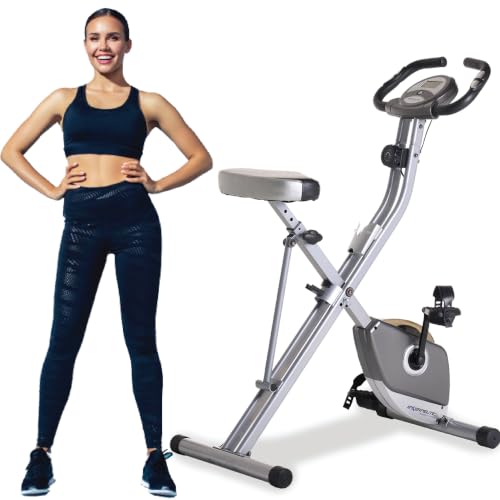
Every other feature is negotiable; this one is not. You need the seat to reach a height where your knee keeps a slight bend at the bottom of the stroke, and, on better bikes, to slide fore and aft so your knee sits over the pedal spindle area. Take your inseam, compare it to the maker's seat height range (not the bike's total height), and treat folding models with extra care: their ranges are shortest and tall riders are their most disappointed owners.
Flywheels and resistance, translated
Almost every bike in this guide is magnetic, which is good news: no friction pads to wear and near-silent operation. Flywheel descriptions vary wildly in honesty. What you feel as smoothness is flywheel inertia plus drive design, and perimeter-weighted systems (Schwinn, Nautilus) genuinely pedal more evenly at low resistance. Raw flywheel weight figures are comparable only within a brand's own line, so use them as a rough guide, never as a cross-brand ranking.
Top picks from our research
Full ranked list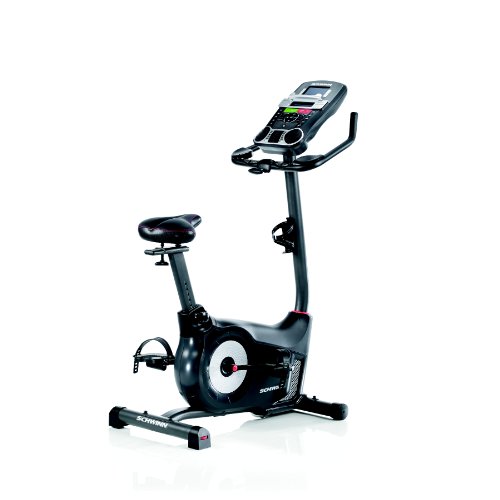
Levels: 8, 16, or 25?
Eight levels serve general fitness and describe most budget and folding bikes. More levels buy finer steps, which matter when you train at specific efforts or share the bike between a beginner and a strong rider. No level count fixes a notchy drive, and a smooth eight (the better folders) rides better than a rough twenty. If a listing shouts its level count and whispers everything else, read that as the review it is.
Consoles: decide who is riding
Three honest tiers: a knob and a basic screen (Marcy, Sunny, folders), a program console (Schwinn 130 class), and a connected program console (Schwinn 170, Nautilus U616). Programs genuinely help riders who get bored; they are furniture for riders who watch television and pedal at one level. Household sharing tilts the answer toward programs and user profiles, as does any plan to follow structured training.
Frame type and the room
Full frames pedal the steadiest, take the least daily effort (roll to a corner), and suit tall and heavy riders best. Folders give the floor back and cap capacity, seat range, and resistance in exchange. Step-over height is the access spec nobody lists well: uprights require lifting a leg over the frame, and any rider for whom that is hard should test one in person or look at step-through recumbents instead. This is fit information, not medical advice.
FAQ
Questions, answered straight
What weight capacity should I look for?
Buy with honest headroom: your dressed riding weight comfortably under the stated limit. Capacities in this guide run from about 200 lb on the smallest budget bike to 300 lb on most full frames and the Exerpeutic folder. Never approximate this spec.
Can I replace the seat on an upright bike?
On most full-frame bikes, yes, the mount is a standard seat post fitting and a preferred saddle swaps in minutes. Seat complaints are the most common in the category, and a saddle you already love is often the cheapest upgrade in home fitness.
Do I need a mat under an upright bike?
On hard floors it stops walking and protects the surface; on carpet it gives the stabilizers a firmer base. Uprights are light enough that a basic equipment mat is a small, worthwhile spend.