Buying guide
Treadmills for Seniors Buying Guide (2027): Speed, Step-Up, Rails, and Stops Explained
How to buy a treadmill for an older walker: minimum speed, deck height, handrail geometry, belt sizing, and console design in plain language.
Begin with the start, not the top speed
Ignore the maximum speed on the box. Ask two questions instead: how slowly can it go, and how small are the steps between speeds? A 0.5 mph floor with fine increments lets a walker begin below a comfortable stroll and build up gradually. Anything that starts at 1.0 mph or faster deserves extra scrutiny for senior use, however good its other specs look.
Measure the step up and the step on
Deck height decides mounting. Folding treadmills with thick cushioned decks can sit as high as a stair step, while flat walking models sit a few inches off the floor. Stand beside the machine in your mind: can you step up while holding a rail, turn, and find the belt without stepping over a side rail? If a showroom or a friend's machine is available, rehearse the mount at home pace before buying any tall deck.
Top picks from our research
Full ranked list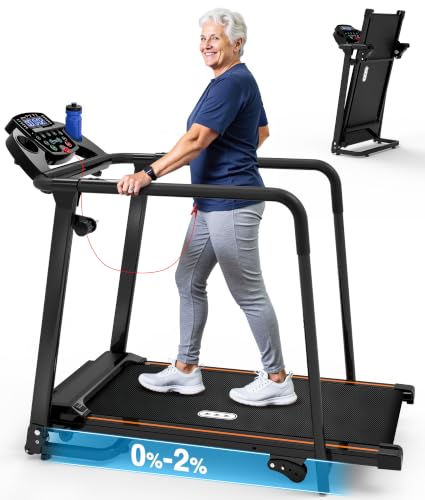
Handrails: draw where your hands will be
A front bar supports starting, stopping, and speed changes. Side rails support walking itself. Long rails support both, at the cost of a narrower entry and a less free arm swing. Match the rail map to the walk: independent walkers do fine with a front bar, confidence walkers should shop the long-rail guide first, and nobody should treat any rail as a prescribed mobility aid.
Belt size and honest stride
For walking, width calms people down: 20 inches feels generous, 16 inches feels precise, and below that many walkers shorten their steps to stay centered. Length matters with height and pace. Slow, short strides fit compact belts; a natural stride at 3 mph wants 50 inches or more. When in doubt, choose room over features.
Stops, keys, and consoles you can read
Every machine here should have a magnetic safety key on a clip, a stop button you can hit without aiming, and a display readable from standing height in your room's light. Physical buttons and handle keys age better than touchscreens for this user. Set up the machine, clip the key, and practice a slow stop before the first real session, and keep the area behind the treadmill clear, always.
FAQ
Questions, answered straight
Should a senior treadmill fold?
Only if someone in the home can fold it comfortably and will actually do it. A heavy folder that never moves is fine; a heavy folder bought for daily storage becomes a daily obstacle. Match the folding plan to the strongest person who will handle it.
How much capacity headroom should I leave?
Choose a rating comfortably above the walker's weight, especially if they will hold rails during starts and stops, which adds load through the frame. Headroom also tends to come with a stiffer, calmer machine.
Is this guide medical advice about who should walk on a treadmill?
No. It covers machine fit: speeds, heights, rails, and controls. Whether treadmill walking suits a particular person, and at what load, is a question for their clinician. Bring these fit details to that conversation.