Buying guide
Suspension Trainer Buying Guide (2027): Anchors, Geometry, Handles, and Capacity
How to buy a suspension trainer: audit your anchor first, choose single point or split geometry, judge handles and cradles, and read capacity and webbing specs like an owner.
Audit your anchor before your straps
Walk your home and name the exact point the trainer will hang from. A solid door that closes toward you supports the biggest group of buyers. A rack upright, exposed beam, or rated ceiling mount opens the full angle range. If the honest answer is a hollow door and no other point, solve the anchor first with a doorway bar setup or a rated mount, because no strap quality compensates for a failing anchor.
Single point versus split anchor geometry
Single point systems self center, level easily, and deliver the converging press feel the category is famous for. Split systems add width control and anchor creativity at the price of leveling and setup thought. Match the geometry to your temperament and your anchor options, not to which product photo looks more serious.
Top picks from our research
Full ranked list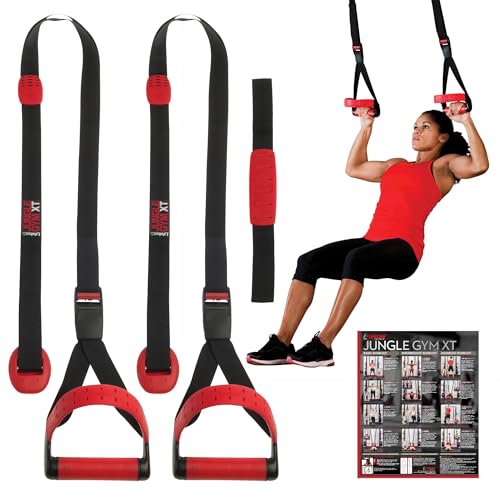
Handles, cradles, and the exercises nobody demos
Posters show rows and presses. Ownership is planks in cradles, hamstring curls that test cradle security, and fallouts that test grip under sweat. Handle diameter and texture, cradle padding, and whether handles rotate or bind decide how much of the full exercise list you will actually use. Large handed and heavy users should weight this section highest.
Adjustment speed is a programming feature
Suspension progressions change strap length between exercises constantly: long for rows, short for dips and presses, mid for core work. Smooth buckles, clear length marks, and equalizer designs keep sessions moving. If changing length takes a fight, you will quietly stop changing length, and half the system value evaporates.
Capacity, webbing, and honest build signals
Look for a published user capacity, commercial or heavy duty webbing language with metal hardware, and stitching you can inspect in listing photos. Vague listings with no capacity and plastic buckles are telling you their intended user. Heavier buyers should buy visibly overbuilt systems and rate their anchor to the same standard.
FAQ
Questions, answered straight
How long should straps be for home use?
Standard systems are sized for anchors up to about nine feet with working room below. Taller anchors need extension straps, which some kits include. Measure anchor height before ordering if your only point is unusually high or low.
Do I need special shoes or a mat?
Grippy shoes or bare feet on a non slip surface, yes. Suspension training is a friction sport: feet that slide turn a row into a fall. A basic mat under the training zone solves most home floors.
Can suspension trainers build muscle without weights?
For most home trainers, yes, especially back, chest, arms, and core, by progressing angle, tempo, and single limb variations. Absolute maximal strength still belongs to heavy loading, which is why suspension systems pair well with bands or dumbbells in a mature gym.