Buying guide
Recumbent Bike Buying Guide (2027): Seats, Rails, Resistance, and Console Sense
How to buy a recumbent bike: step-through design, seat rail range and knee fit, magnetic resistance levels, capacity margins, and console readability.
Access is the first spec
Stand in the showroom of your mind and get on the bike. A true walk-through frame lets you step through a low gap and sit down sideways into the chair, then swing your legs over the low center. Check three numbers: the step-through height if published, the seat height from the floor, and whether side handles sit where your hands land while sitting. For senior buyers this section outranks everything below it. A bike that is awkward to mount is a bike that gets skipped on stiff mornings.
Set the seat by the knee rule
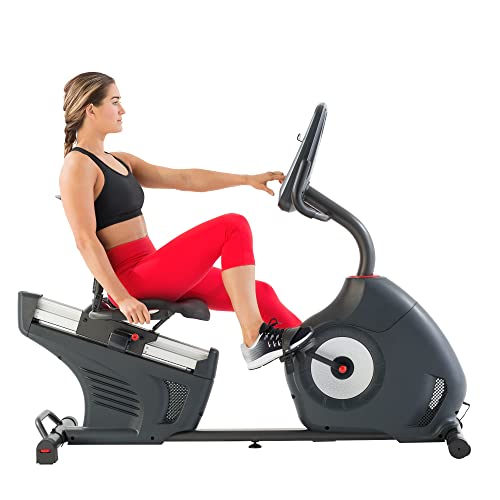
Seat position decides knee load more than resistance does. Sit down, rest your heel on the pedal at its farthest point, and slide the rail until that leg is almost straight with a soft bend remaining. Ride with the ball of your foot from that setting. Too close and the knee folds sharply every stroke; too far and your hips rock. Prefer bikes whose rail adjusts with a lever you can reach while seated, and be skeptical of very short rails if you are tall. This is fit guidance, not medical advice.
Top picks from our research
Full ranked list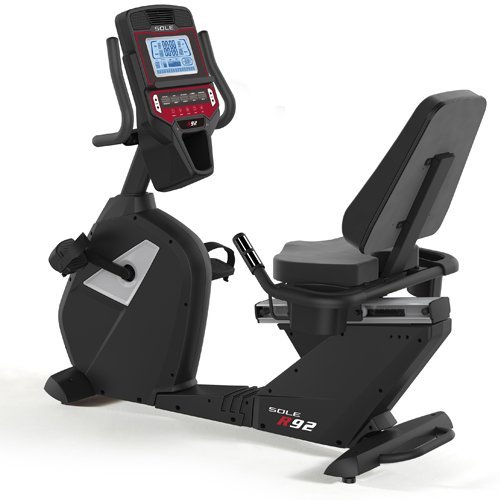
Resistance: count the usable levels
All ten bikes here use magnetic resistance, which is silent and maintenance free. The real question is granularity. Eight level knob bikes are fine for steady gentle riding. Twenty or more levels, ideally with an eddy current brake, give small steps that let you progress without jumps, and they pair with the program libraries on the Schwinn and Nautilus consoles. Ignore flywheel weight marketing on recumbents; at seated cadences the brake system matters more.
Capacity is a durability margin
Buy at least 40 to 50 lb of rated capacity above your riding weight. Frames ridden near their limit flex at the seat rail, creak at the stabilizers, and wear crank bearings early. That is why this guide keeps three 350 lb and 325 lb options in a category where 300 lb is the norm, and why heavier riders should read capacity before programs.
Consoles: readability beats features
Ask four questions of any console. Can you read it from the seat in your room's light? Can you start a manual ride in under three button presses? Does it work fully with no phone, account, or subscription? Are the pulse grips where your hands naturally rest? A yes set beats a long feature list. Screens with required memberships do not appear in this guide at all.
FAQ
Questions, answered straight
Recumbent or upright bike for a senior rider?
Recumbent, in most cases we see: lower and safer mounting, back support, and no saddle pressure. Uprights win only on footprint and for riders who specifically want a cycling posture. This is general fit information, not medical advice.
How long should a home recumbent last?
Magnetic bikes have few wear parts: pedals and straps, seat hardware, and eventually crank bearings. Name brand frames with parts support, Schwinn, Sole, Spirit, commonly run many years of daily use. No name imports depend on the seller still existing when you need a pedal.
Can two people of different heights share one bike?
Yes, if the seat rail is long and the adjustment is a lever rather than a pin you must align by eye. Mark each rider's rail position with tape and swaps take seconds.