Buying guide
Rebounder Buying Guide (2027): Bungee vs Spring, Mat Size, Bars, and Noise
How to buy a rebounder: suspension explained, why usable mat beats frame size, capacity headroom, handlebar types, and the health claims to ignore.
Bungee versus spring is the first decision
Bungee cords stretch further and return slower, giving a soft, deep, quiet bounce that apartment users and joint sensitive owners prefer. Springs return faster and feel firmer and livelier, cost less, and make noise that grows as they age. There is no wrong answer, but there is a wrong match: a spring trampoline bought for silent 6 am apartment use will disappoint, and a soft bungee bought for snappy athletic footwork can feel vague.
Buy the mat, not the frame number
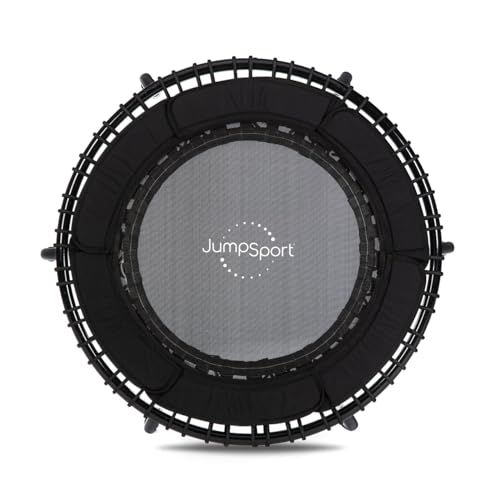
Frame diameter includes the ring of cords or springs your feet must never land on. Subtract roughly 8 to 12 inches to estimate usable mat. A 39 to 40 inch frame means about 30 inches to stand on, a 44 inch frame about 32, and a 48 inch frame about 36. If you plan anything beyond bouncing in place, or you are tall or broad, mat room is the spec to pay for.
Top picks from our research
Full ranked list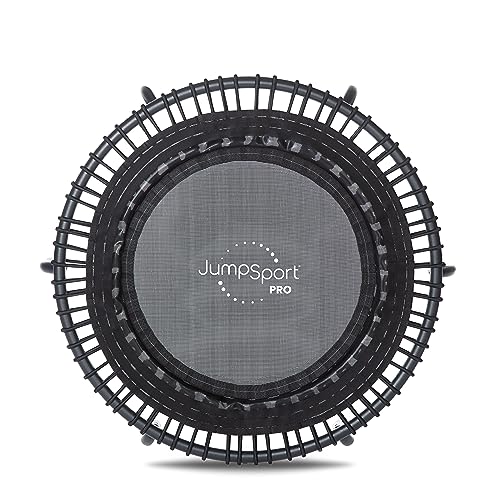
Capacity needs headroom, because bouncing is dynamic
At the bottom of each bounce the frame sees well more than your standing weight. Treat the rated capacity as a ceiling to stay comfortably below, not a target. If you are within about 30 lb of a model cap, step up a model. Also check the exact variant: budget listings often show different capacities for different sizes under one product page.
Handlebars: steadying aid, not support equipment
A good bar is made for its frame, height adjustable, and rigid when its bolts are tight. A bar helps you step on and off and steadies light bouncing. It is not a mobility aid and should not be leaned on with full weight; budget clamp on bars flex the most. If balance is a medical concern, a rebounder may not be the right equipment at all without clinician input, bar or no bar.
Ignore the health claim marketing, including detox and lymphatic promises
Rebounders attract more pseudoscience than almost any home fitness category. Claims that bouncing detoxes the body, drains the lymphatic system in a special therapeutic way, cures conditions, or melts fat locally are marketing, not evidence we can stand behind, and some brands in this guide lean on them heavily. Moving on a rebounder is exercise, and regular low impact exercise is a sensible goal on its own merits. Buy for bounce quality, build, noise, and fit, and treat any product page that leads with detox language as a reason to scrutinise everything else it says.
FAQ
Questions, answered straight
How high off the ground is a rebounder mat?
Most sit roughly 9 to 14 inches high depending on leg design. That step up height, plus the give of the mat, is worth considering for users with limited mobility.
Do I need special shoes?
Many owners bounce barefoot or in socks with grip on bungee models, while spring model guidance often suggests athletic shoes. Follow your model manual, and never step on the cord or spring cover.
How much room do I need around it?
The frame diameter plus a clear margin to step on and off safely, and enough ceiling height that low bouncing with raised arms is comfortable. Measure both before ordering a 48 inch frame.