Buying guide
Power Rack Buying Guide (2027): Uprights, Spacing, Depth, and the Measurements That Matter
How to buy a power rack: choose upright size and gauge, read hole spacing, pick depth and height for your room, plan safeties, and price the finished build rather than the frame.
Start with the room, not the rack
Measure ceiling height, then subtract pull-up headroom. Measure the floor, then add plate loading clearance at both sides and bench length behind the frame. Those two measurements eliminate half the catalog immediately and prevent the most expensive mistake in this category, a perfect rack in a room it cannot serve. Note doorways and stairs too; large uprights travel badly through tight turns.
Upright size is an ecosystem decision
2x2, 2x3, and 3x3 inch uprights each carry their own attachment world. The rack is the cheapest part of the system over time; J-cups, safeties, dip bars, cable units, and storage all follow the tube size you choose today. Pick the standard whose catalog contains the three attachments you know you want, and treat exotic sizes as a commitment to one brand.
Top picks from our research
Full ranked list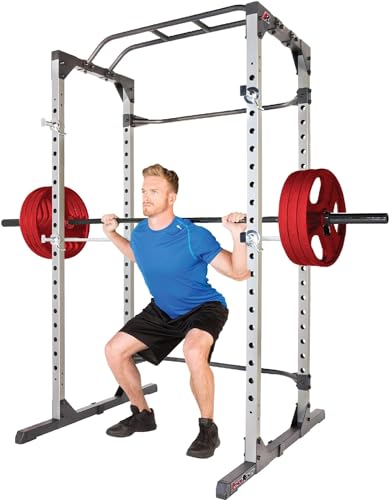
Hole spacing and the bench test
Walk your bench press through any rack you consider. You need a J-cup height that lets you unrack with straight wrists and a safety height just below chest contact. Westside spacing exists because 2 inch steps miss those marks for many bodies. If a rack lacks fine spacing, check whether your bench adjusts to compensate before dismissing it.
Safeties are the reason the rack exists
A rack earns its floor space on the day a lift fails. Full length bars, pins, or straps inside the cage, rated for the frame and set without fuss, matter more than any accessory. Confirm what safety system is included in the price, because on several popular frames the good safeties are a separate line item.
Price the December version of your gym
Base frame, safeties, storage, one or two attachments, flooring, and freight. That total is the honest comparison between a budget cage that includes parts and a premium frame that includes none. Buyers who run this math upfront rarely feel ambushed later, whichever tier they choose.
FAQ
Questions, answered straight
How much capacity do I actually need?
Your heaviest planned rack load, typically a squat or rack pull, plus a sensible margin. Most home lifters live far below four figure ratings, which is why rigidity and spacing outrank capacity in this guide's ranking logic.
Is a half rack ever the better buy?
Yes, for very tight rooms and lifters who never train alone at max effort. A full cage gives four post safety for solo benching and failed squats, which is why this guide centers cages for home use.
What flooring goes under a power rack?
At minimum, dense rubber mats over the training area. A lifting platform spreads load, quiets reracks, and gives a level, bolt friendly surface that improves how any frame feels.