Buying guide
Dip Station Buying Guide (2027): Spacing First, Then Height, Steel, and Floors
How to buy a dip station: measure your dip width, choose between independent bars and connected frames, match height to leg clearance, and grade stability for the loads you will actually use.

Measure your dip width before any brand names
Stand between any parallel bars you can access, a pair of sturdy chairs in a pinch for position only, and find where your hands sit when the upper arm tracks comfortably and the shoulder stays down. That number, give or take an inch, is your spacing target. Adjustable and equalizer designs forgive a rough estimate; fixed stands demand an accurate one.
Independent bars or a connected frame
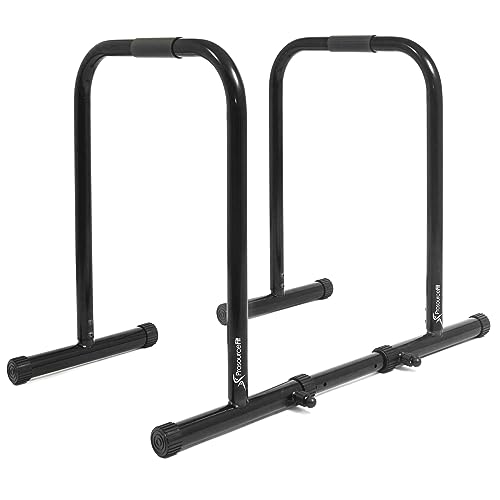
Independent equalizer bars trade a moment of setup and a mat for total width freedom and a menu of extra exercises. Connected frames trade storage and flexibility for walk-up-and-dip rigidity. Neither is the advanced choice; they are different answers to how varied your bodyweight training is.
Top picks from our research
Full ranked list
Height and leg clearance
Your station is tall enough when the bottom of your dip, at the depth your shoulders should use, leaves your chosen leg position clear of the floor. Straight-leg trainers and tall users shop the high 30s in inches; tucked-knee trainers can live happily at 31. L-sit ambitions add their own clearance demand, listed per product in this hub.
Grade stability for your next year of loads
Bodyweight strict work is kind to almost everything here. Belt progression is not. If plates are in the twelve-month plan, buy the frame class now, because replacing a station mid-progression costs more than the upgrade would have. Keep total load visibly inside ratings in all cases.
Grips, feet, and floors
Handle diameter around the standard barbell-adjacent sizes suits most hands; foam adds comfort and a replacement date, bare or lightly finished steel lasts. Rubber feet and a dense mat protect floors and calm small movements on every design in this category.
FAQ
Questions, answered straight
Are dips bad for shoulders?
Dips load the shoulder in extension, which healthy shoulders tolerate and progress well on when depth is earned gradually and width suits the body. Pain is information: reduce depth, adjust width, build with rows and assisted work, and treat persistent pain as a medical question, not an equipment one.
What can I do if I cannot perform a full dip yet?
Foot-assisted dips, bench dips as a bridge, slow negatives from the top, and rows on the same bars. Equalizer designs support every step of that ladder, which is why they lead the beginner recommendations here.
Do I need a dip station if I own a power tower?
Only if the tower's fixed spacing fights your shoulders or its dip rigidity limits your loading. Many trainers start on the tower and add a station when dips become a primary lift; the reverse order suits dip-first programs.