Buying guide
Battle Rope Buying Guide (2027): Length, Diameter, Fiber, Sleeves, and Anchors
How to buy a battle rope: measure the run before choosing length, treat diameter as grip load, pick fiber and sleeve for your surface, and solve the anchor before the rope arrives.
Measure the run, then pick the length
Stand where the anchor will be and measure to where you will train. That distance is half the rope. A 30 foot rope needs about 15 clear feet, a 40 needs about 20, and a 50 needs about 25, plus room for your stance and a step back. Buyers who measure first almost never return ropes; buyers who guess by fitness level alone account for most size regret in owner feedback. If the run is short, a shorter rope used well beats a long rope managed badly, and the unanchored weighted format exists for rooms that fail this test entirely.
Diameter is grip load, not a badge
The standard 1.5 inch rope is the conditioning tool: most adults can hold it for full intervals and let breathing be the limit. The 2 inch rope moves the limit to forearms and hands, shortens every set, and changes the exercise into something closer to grip strength work with conditioning attached. Neither is more advanced in a simple sense; they train different bottlenecks. Most homes should own the 1.5 inch rope first and treat any 2 inch purchase as a second, specialist tool.
Top picks from our research
Full ranked list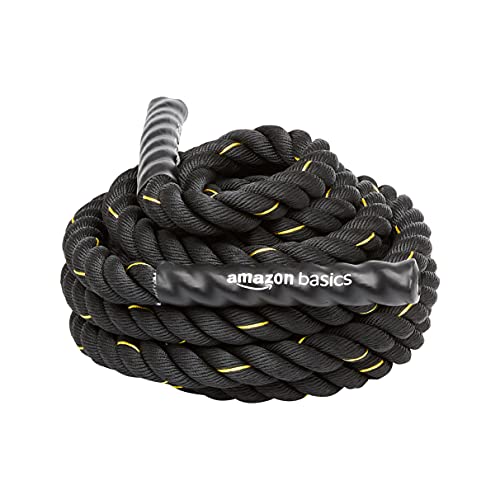
Fiber and sleeve follow the surface
Modern home ropes are synthetic for good reason: they tolerate humidity, dry quickly, and do not rot in a garage. Natural manila style ropes exist for looks and traditional feel but belong indoors. The bigger decision is the jacket. A full protective sleeve is near mandatory for concrete and asphalt, helpful on garage floors, and optional on rubber gym flooring or turf. Match the construction to the roughest surface the rope will actually touch weekly, not the nicest one.
Solve the anchor before checkout
Every standard rope needs a fixed midpoint that will not creep, slide, or damage what it wraps. Strap kits around rack uprights, posts, and trees are the default home answer; dedicated wall anchors need studs and suit permanent setups. Improvised anchors like a single light kettlebell tend to travel across the floor mid set. If nothing in the room qualifies, that is useful information: it points to the unanchored weighted rope format rather than to a standard rope and a hope.
Storage and care that extend service life
Coil the rope in large loops, store it dry and off bare damp concrete, and let the sleeve, where fitted, be the part that meets the ground. Check handle caps and the midpoint section monthly, since the anchor zone takes concentrated wear. A rope that is stored coiled in a corner will be grabbed for short sessions far more often than one buried under other gear, which is a training adherence spec no listing prints.
FAQ
Questions, answered straight
What is the best battle rope size for a garage?
For a typical two car garage used diagonally, 40 feet at 1.5 inches is the common sweet spot. Single bay and shared garages usually fit 30 feet honestly. Measure the diagonal before deciding; garages vary more than the averages suggest.
Are expensive ropes actually heavier per foot?
At the same length, diameter, and fiber class, weight is broadly similar across brands, because physics sets it. Premium money buys jackets, kits, finishing, and in one case here a completely different weighted format, not magical density.
How long should a home battle rope last?
A synthetic sleeved rope used on appropriate surfaces is a multi year purchase. Bare ropes on rough ground can show serious fiber wear within a season. Surface match, stated throughout this guide, is the main lifespan variable under the owner control.