Buying guide
Air Bike Buying Guide (2027): Drives, Fans, Consoles, and the Noise Talk
How to buy an air bike: belt versus chain drive, fan diameter and ramp, interval console tools, seat hardware, capacity, and realistic placement and noise planning.
Start with the noise talk
Every air bike is loud in proportion to effort, because the fan is both the resistance and the sound. At a warm-up pace any of these bikes is civil; at a sprint, all of them announce it to the house. Belt drives remove chain clatter and are the better mannered choice, but no purchase makes a fan bike apartment quiet. Decide placement first (garage, basement, hard floor, dense mat) and only then pick a model, or you will own the right bike in the wrong room.
Belt, chain, or hybrid drive
Belts are fit and forget: quiet, clean, no lubrication, with a long service life, and they anchor the premium end (Echo, Airdynes, Blitz). Chains are cheaper, rawer, and repairable with bicycle parts, at the cost of a lube and tension routine (Assault Classic, Titan, Marcy). The Pro X hybrid runs a belt primary stage into the drive to cut maintenance while keeping Assault's build. There is no wrong answer, only an honest one about whether you enjoy small maintenance rituals.
Top picks from our research
Full ranked list
Fan size and the strong rider ceiling
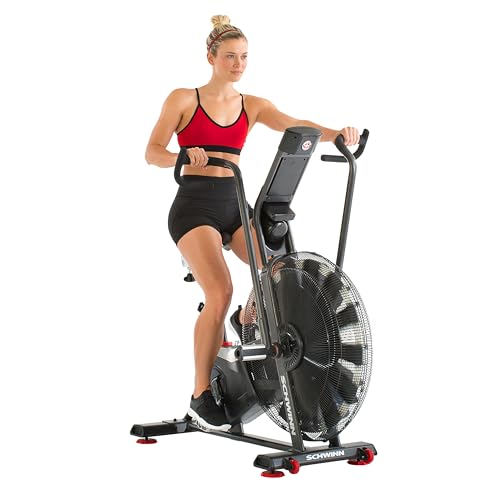
Fan diameter and blade design set how resistance builds and where it tops out in feel. Large steel fans in the 25 to 27 inch class (Assault, Echo, AD7) ramp hard and never run out for practical purposes. Budget bikes with smaller fans and lighter frames can feel overwhelmed by strong riders at maximal effort, not because resistance ends, but because the frame moves and the ramp flattens in character. Match the bike's class to the hardest session you will actually do.
Consoles: intervals or it did not happen
Judge an air bike console on interval timers, target calorie and distance countdowns, and numbers big enough to read while your vision narrows. Heart rate telemetry matters for mixed training households (the Schwinn strength). Bluetooth matters only if you truly log sessions off the bike; most conditioning riders run a watch and never miss it.
Hardware: seats, posts, and capacity margins
The category's long term complaints are mechanical: seat posts that slip, handle bolts that loosen, saddles nobody likes. Favor designs with clamp style posts, check bolts monthly for the first season on any brand, and budget a saddle swap without resentment, since almost everyone eventually does one. Keep the usual capacity margin above your weight, and add extra margin if you sprint standing, which loads the frame well past static numbers.
FAQ
Questions, answered straight
Can an air bike be my only cardio machine?
For conditioning focused training, yes; it covers intervals and steady work in one footprint with no power needed. Riders who love long, quiet, structured sessions usually pair it with or choose a spin bike instead. Be honest about which sessions dominate your week.
Do fan bikes wear out?
The fan and frame effectively do not. Wear lives in chains, belts after long service, bearings, seats, and console batteries, all replaceable on the name brand bikes here. That repairability is a core reason to favor established models over no name imports.
What mat should go under an air bike?
A dense, heavy equipment mat, not a yoga mat. Density stops the bike walking during sprints, protects the floor from sweat and dropped parts, and trims a little transmitted vibration.